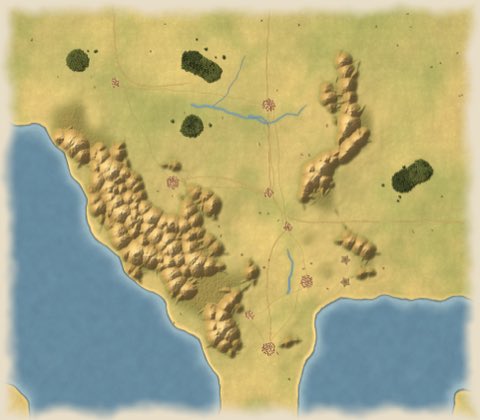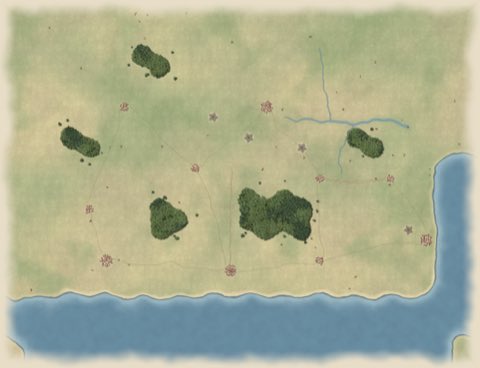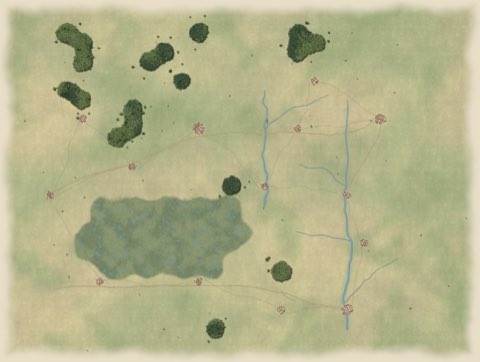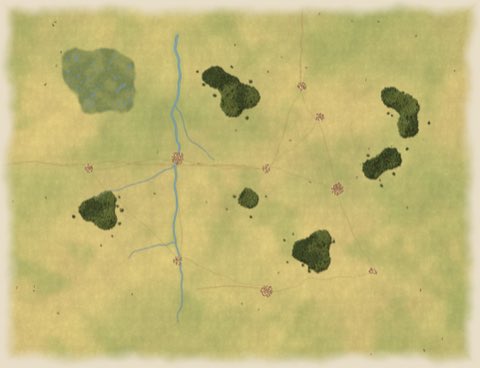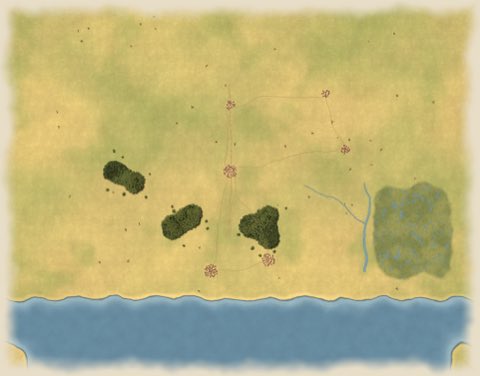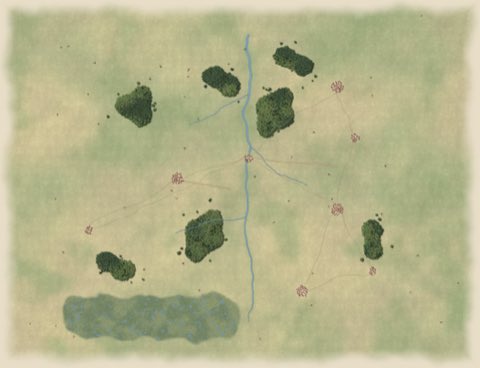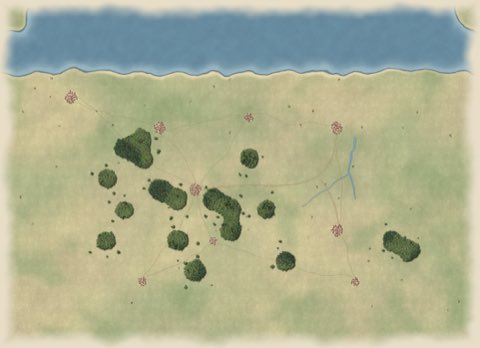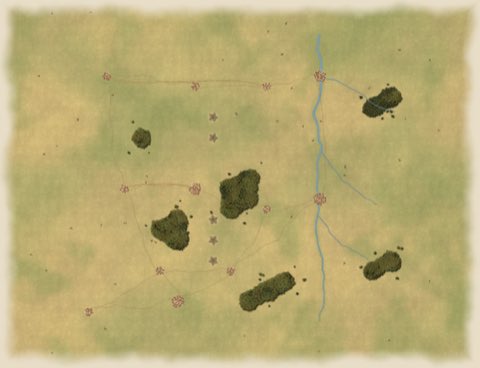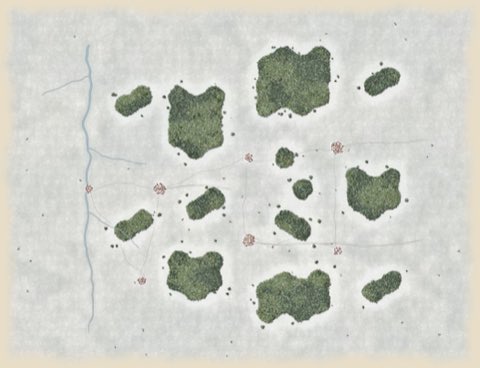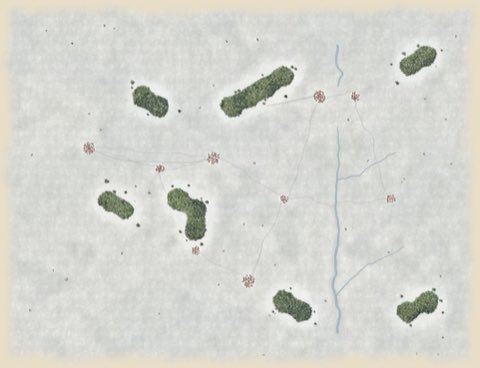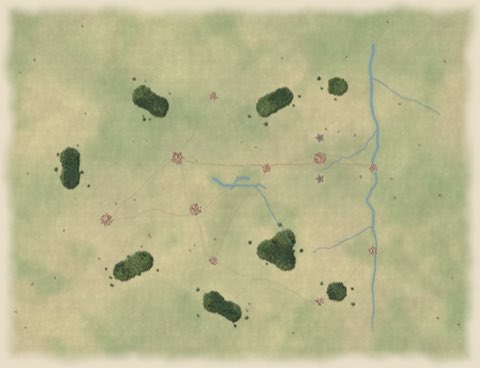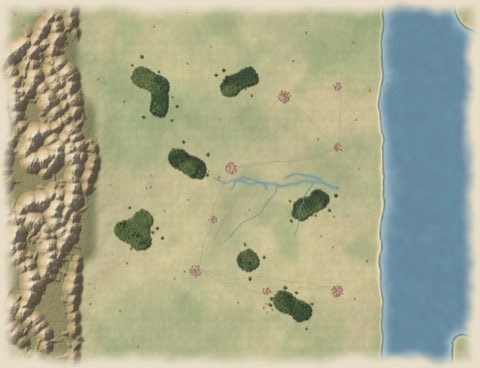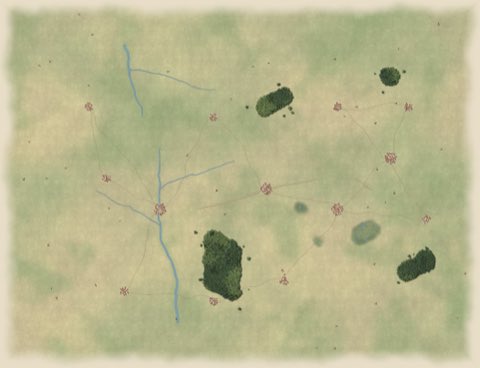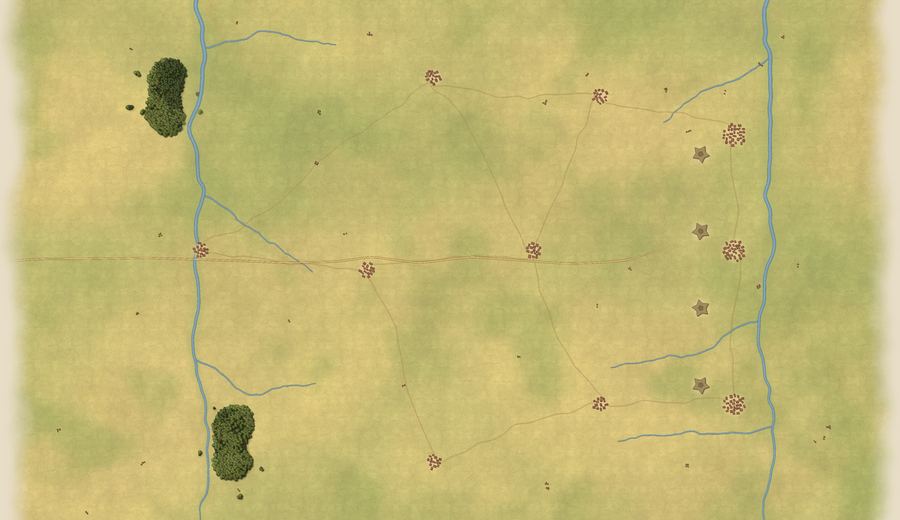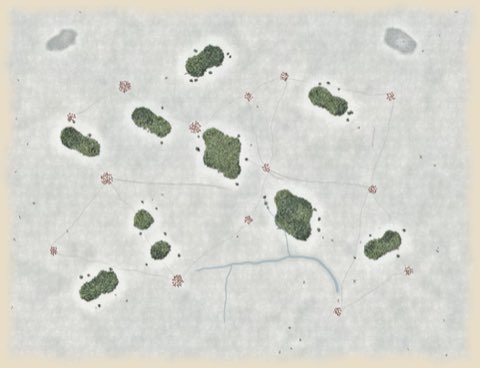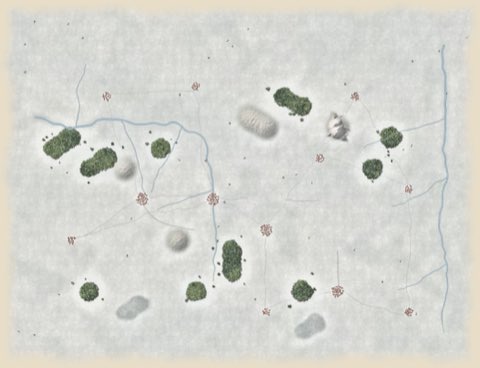
Choose your side

Campaigns

How you win decides where the war goes next: a decisive victory opens a different road, and a defeat sends you down a harder one.

All 48 battles of the three campaigns, in campaign order, with the briefing you are given, what victory needs, and, after each, what really happened in the war. Every battle can also be fought on its own in Quick Battle, and against another player in a match.

1939 – 1945

The Axis Campaign

Poland to Berlin

You command the German army: 23 battles over 17 stages, starting with 150 prestige. Battles at the same stage are alternatives: which one you fight depends on how you won the battle before.

23 battles

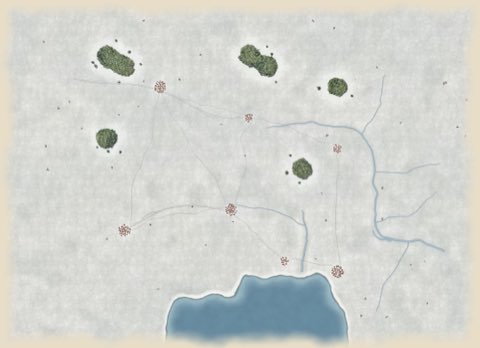
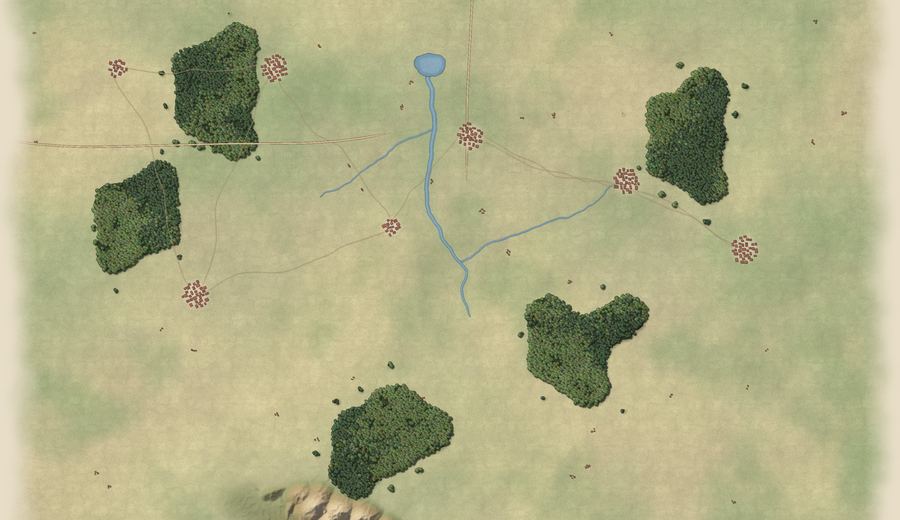
The Fall Weiss battle map

Stage 1 of 17 · 1939

Poland

Fall Weiss

At dawn the Wehrmacht crosses the Polish frontier. Army Group North strikes from Pomerania, Army Group South from Silesia and Slovakia. Poland's armies are deployed forward and its allies are far away. Take Warsaw and the four regional centres before the autumn rains turn the roads to mud.
Date
1 September 1939
Turns
13 (decisive by turn 8)
You command
German forces, 13 units
Against
Polish forces, 12 units
To win
Take all 5 objectives by the end of turn 13; take them by turn 8 for a decisive victory.
Objectives
Warsaw, Poznan, Lodz, Krakow and Lwow
Weather
Clear; rain from turn 9; mud from turn 11
In a match
Allied side Favoured, Axis side a Hard Challenge

Next: France.

What really happened

The invasion of Poland

1 September to 6 October 1939

Germany invaded on 1 September 1939, with armoured columns converging on Warsaw. Britain and France declared war but did not attack in force. On 17 September the Soviet Union invaded from the east. Warsaw surrendered on 28 September after heavy bombing, and the last Polish field forces laid down their arms on 6 October.

The cost. About 16,000 German dead. About 66,000 Polish soldiers dead and 694,000 captured by Germany. An estimated 10,000 to 25,000 civilians died in the siege of Warsaw.
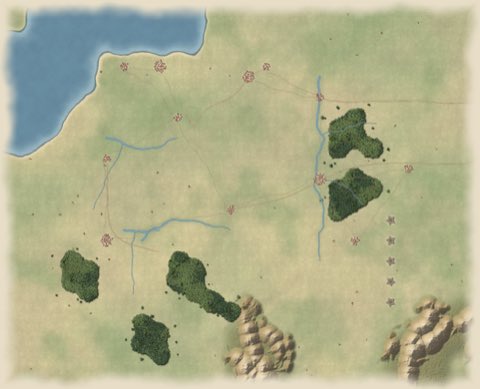
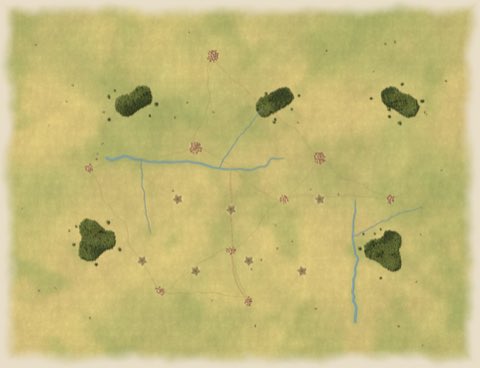
The Fall Gelb battle map

Stage 2 of 17 · 1940

France

Fall Gelb

The Sitzkrieg is over. While the Allies advance into Belgium to meet the blow they expect, the armour goes through the Ardennes, the forest they called impassable. Cross the Meuse at Sedan, cut the British off at Dunkirk, take Brussels, and finish it in Paris. Leave the Maginot Line to its garrisons.
Date
10 May 1940
Turns
17 (decisive by turn 11)
You command
German forces, 15 units and 3 attached
Against
Allied forces, 19 units
To win
Take all 4 objectives by the end of turn 17; take them by turn 11 for a decisive victory.
Objectives
Dunkirk, Brussels, Sedan and Paris
Weather
Clear
In a match
Allied side Favoured, Axis side a Hard Challenge

A decisive victory leads to Battle of Britain; any other result to Balkans.

What really happened

The Battle of France

10 May to 25 June 1940

German infantry and engineers forced the Meuse at Sedan on 13 May, and the panzers reached the Channel a week later, cutting off the Allied armies in Belgium. More than 330,000 troops escaped from Dunkirk. Paris was occupied on 14 June, and France signed an armistice on 22 June.

The cost. About 27,000 German dead. About 50,000 to 90,000 French dead and 1.8 million captured.

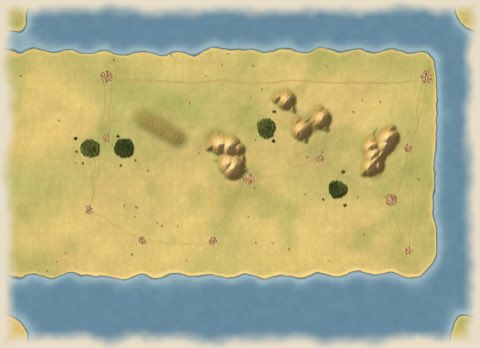
The Adlerangriff battle map

Stage 3 of 17 · 1940

Battle of Britain

Adlerangriff

France has fallen and the army stands on the Channel coast with no way across. Before any invasion the Royal Air Force must be broken: its fighters shot down, the guns that protect its airfields silenced. This is the Luftwaffe's battle, and only the aircraft take part. Escort the bombers, bring Fighter Command to battle over its own fields, and destroy it. Fresh squadrons will come south from the Midlands as the battle goes on, so do not count the enemy beaten until they are.
Date
13 August 1940
Turns
12
You command
German forces, 3 units and 7 attached
Against
British forces, 8 units
To win
Destroy the enemy force: at least 9 units by the end of turn 12, 10 for a decisive victory.
Objectives
Weather
Clear
Reinforcements
0 for you, 4 for the enemy, arriving during the battle
In a match
Axis side Favoured, Allied side a Hard Challenge

A decisive victory leads to Sea Lion; any other result to Barbarossa.

What really happened

The Battle of Britain

July to October 1940

The Luftwaffe set out to destroy the Royal Air Force as the first step towards an invasion. Eagle Day, 13 August, opened the main assault. Radar, Fighter Command's control system and Britain's aircraft factories kept the squadrons flying, and on 7 September the bombers turned on London. By the end of October the daylight battle was lost, and the Blitz went on by night.

The cost. About 1,500 RAF aircrew and 2,600 German airmen killed. About 23,000 British civilians died in the bombing by the end of 1940.

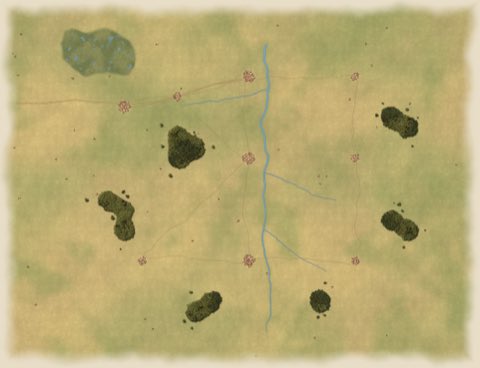
The Unternehmen Marita battle map

Stage 3 of 17 · 1941

Balkans

Unternehmen Marita

A coup in Belgrade has torn up Yugoslavia's pact with the Axis, and the British have landed in Greece. Both problems are to be solved at once. Take Belgrade and Sarajevo to finish Yugoslavia, then drive down the Vardar to Salonika and on to Athens. The mountains belong to the infantry; the armour must keep to the roads and the valleys.
Date
6 April 1941
Turns
14 (decisive by turn 11)
You command
German forces, 15 units and 2 attached
Against
Allied forces, 16 units
To win
Take all 4 objectives by the end of turn 14; take them by turn 11 for a decisive victory.
Objectives
Belgrade, Sarajevo, Salonika and Athens
Weather
Clear
In a match
Even

Next: Barbarossa.

What really happened

The invasion of Yugoslavia and Greece

6 to 30 April 1941

Germany attacked Yugoslavia and Greece on 6 April 1941, bombing Belgrade on the first morning. Yugoslavia surrendered on 17 April. In Greece, German armour went through the mountain passes and around the Metaxas Line, forcing British and Commonwealth troops into retreat. Athens fell on 27 April, and most of the British force was evacuated by sea.

The cost. About 1,300 German dead. About 13,000 Greek dead since the Italian invasion of October 1940. Thousands of civilians were killed in the bombing of Belgrade.

The Unternehmen Seelöwe battle map

Stage 4 of 17 · 1940

Sea Lion

Unternehmen Seelöwe

Fighter Command is broken and the barges have crossed in the night. The first wave is ashore between Brighton and Hastings with what it could carry: infantry, a handful of tanks, few guns. Everything depends on the ports. Take Brighton, Portsmouth and Dover so that the follow-up divisions and their armour can land, then break the stop-line south of the Thames and take London. The British have little left, but what they have is coming south as fast as it can march.
Date
21 September 1940
Turns
16 (decisive by turn 10)
You command
German forces, 14 units
Against
British forces, 17 units
To win
Take all 4 objectives by the end of turn 16; take them by turn 10 for a decisive victory.
Objectives
London, Dover, Portsmouth and Brighton
Weather
Clear
Reinforcements
5 for you, 3 for the enemy, arriving during the battle
In a match
Allied side Favoured, Axis side a Hard Challenge

Next: Barbarossa.

What really happened

The invasion of Britain

Planned for September 1940 · never fought

No German army crossed the Channel. The Luftwaffe failed to win control of the air over Britain, and on 17 September 1940 Hitler postponed the invasion indefinitely. The invasion barges were dispersed, and German planning turned east, towards the Soviet Union.

The Unternehmen Barbarossa battle map

Stage 5 of 17 · 1941

Barbarossa

Unternehmen Barbarossa

Three million men cross the frontier at dawn. The Red Army is vast, forward-deployed and unready, but it is not Poland and it is not France: there is always another line behind the one just broken, and the distances swallow armies. Take Minsk and Smolensk on the Moscow highway and Kiev in the south. Keep the spearheads fed — a panzer division that outruns its supply is a row of stationary guns.
Date
22 June 1941
Turns
13 (decisive by turn 9)
You command
German forces, 20 units and 5 attached
Against
Soviet forces, 30 units
To win
Take all 3 objectives by the end of turn 13; take them by turn 9 for a decisive victory.
Objectives
Smolensk, Minsk and Kiev
Weather
Clear; rain from turn 12
In a match
Axis side Favoured, Allied side a Challenge

A decisive victory leads to Moscow; any other result to Kiev.

What really happened

Operation Barbarossa

22 June to December 1941

The largest invasion in history began on 22 June 1941. Three German army groups took the Red Army by surprise. Minsk fell within a week and Smolensk by mid-July, and vast encirclements took prisoners by the hundred thousand. But the Soviet Union did not collapse, and by autumn the German timetable had slipped.

The cost. About 200,000 German dead by December. More than 800,000 Soviet soldiers dead and over 3 million captured, most of whom died in captivity. Behind the front, SS killing squads began the mass murder of Soviet Jews.

The Kesselschlacht Kiew battle map

Stage 6 of 17 · 1941

Kiev

Kesselschlacht Kiew

Smolensk has fallen, but a Soviet army group of half a million men still holds the great bend of the Dnieper around Kiev, hanging on the flank of any drive for Moscow. The armour is turned south. Guderian comes down from the north through Konotop; Kleist breaks out of the bridgehead at Kremenchug. Take Kiev, close the ring at Lokhvitsa, and hold the crossing at Kremenchug. Close it quickly: everything not caught inside will be met again in front of Moscow.
Date
25 August 1941
Turns
9 (decisive by turn 4)
You command
German forces, 19 units and 2 attached
Against
Soviet forces, 25 units
To win
Take all 3 objectives by the end of turn 9; take them by turn 4 for a decisive victory.
Objectives
Kiev, Lokhvitsa and Kremenchug
Weather
Clear
Reinforcements
0 for you, 2 for the enemy, arriving during the battle
In a match
Allied side Favoured, Axis side a Hard Challenge

Next: Kharkov.

What really happened

The encirclement of Kiev

23 August to 26 September 1941

Hitler turned Guderian's panzers south from the road to Moscow. They made first contact with Kleist's armour on 14 September and closed the ring by 16 September, trapping four Soviet armies that Stalin had refused to withdraw. Kiev fell on 19 September and the pocket was cleared within a week. It was the largest encirclement of the war, and it cost the Germans weeks before Moscow.

The cost. About 700,000 Soviet casualties, more than 600,000 of them killed, missing or captured. Days after the city fell, nearly 34,000 Jews were murdered at Babi Yar.

The Unternehmen Taifun battle map

Stage 6 of 17 · 1941

Moscow

Unternehmen Taifun

One more effort and the war in the east is decided. Army Group Centre attacks on the Moscow highway with everything that can still move. The first days must be used to the full: break the front at Vyazma and Bryansk while the ground is dry, because the autumn rains will turn every road but the highway into a swamp, and behind the rain comes the frost. Take Vyazma, Kalinin and Tula to open the flanks, then Moscow itself. Fresh divisions are reported moving west from Siberia.
Date
2 October 1941
Turns
17 (decisive by turn 13)
You command
German forces, 18 units and 2 attached
Against
Soviet forces, 20 units
To win
Take all 4 objectives by the end of turn 17; take them by turn 13 for a decisive victory.
Objectives
Kalinin, Vyazma, Moscow and Tula
Weather
Clear; rain from turn 5; mud from turn 8; snow from turn 12
Reinforcements
0 for you, 3 for the enemy, arriving during the battle
In a match
Allied side Favoured, Axis side a Hard Challenge

Next: Kharkov.

What really happened

The Battle of Moscow

2 October 1941 to 7 January 1942

Operation Typhoon opened on 2 October with huge encirclements at Vyazma and Bryansk. Then the autumn rain turned the roads to mud, and the frost that followed froze engines and guns. Tula never fell. German patrols came within about 30 kilometres of the Kremlin, and on 5 December the Red Army, reinforced from the east, struck back.

The cost. Estimates run from 650,000 to over a million Soviet casualties, and 170,000 to 400,000 German.

The Unternehmen Fridericus battle map

Stage 7 of 17 · 1942

Kharkov

Unternehmen Fridericus

Timoshenko has struck first. His armies have burst out of the Izyum bridgehead and are driving west toward Kharkov, deeper into a sack with every mile. The bulge they have made is their own trap. Strike from the north at Balakleya and from the south at Slavyansk, meet on the Donets at Izyum, and cut off everything west of the river. Then clear the pocket: Barvenkovo and Lozovaya. More Soviet armour is coming up east of the Donets, so the door must be shut before it arrives.
Date
17 May 1942
Turns
10 (decisive by turn 5)
You command
German forces, 20 units and 2 attached
Against
Soviet forces, 21 units
To win
Take all 3 objectives by the end of turn 10; take them by turn 5 for a decisive victory.
Objectives
Izyum, Lozovaya and Barvenkovo
Weather
Clear
Reinforcements
0 for you, 5 for the enemy, arriving during the battle
In a match
Even

Next: Stalingrad.

What really happened

The Second Battle of Kharkov

12 to 28 May 1942

On 12 May the Red Army attacked out of the Izyum salient to retake Kharkov. Five days later Kleist's armour struck the base of the salient from the south, under the plan called Fridericus. Stalin refused to halt the offensive until too late. By 22 May the pocket was closed, and the road to Stalingrad and the Caucasus lay open.

The cost. About 277,000 Soviet casualties, some 171,000 of them killed, missing or captured. About 20,000 to 30,000 German casualties.

The Stalingrad battle map

Stage 8 of 17 · 1942

Stalingrad

Stalingrad

The Don is behind you and the Volga is sixty kilometres ahead across open steppe. Sixth Army is to take Stalingrad and cut the river. The approach is a matter of days: break the line at Kalach, overrun the airfield at Gumrak. The city is another matter. Its three districts, the Tractor Works in the north, the centre, and Beketovka in the south, are being fortified street by street, and every night the ferries bring fresh divisions across from the east bank. Take it quickly or it will take the army.
Date
23 August 1942
Turns
15 (decisive by turn 12)
You command
German forces, 20 units and 2 attached
Against
Soviet forces, 19 units
To win
Take all 3 objectives by the end of turn 15; take them by turn 12 for a decisive victory.
Objectives
Tractor Works, Stalingrad and Beketovka
Weather
Clear; rain from turn 12
Reinforcements
0 for you, 3 for the enemy, arriving during the battle
In a match
Allied side Favoured, Axis side a Hard Challenge

A decisive victory leads to Caucasus; any other result to Retreat to the Don.

What really happened

The Battle of Stalingrad

23 August 1942 to 2 February 1943

The Sixth Army reached the Volga on 23 August, the day German bombers set the city ablaze. The fight went on street by street and factory by factory, with the Soviet 62nd Army clinging to a strip along the river. From 19 November two Soviet pincers encircled the attackers. The last of them surrendered on 2 February 1943.

The cost. More than a million Soviet casualties. About 800,000 Axis casualties, with 91,000 taken prisoner, of whom about 6,000 came home. Tens of thousands of civilians died.

The Unternehmen Edelweiß battle map

Stage 9 of 17 · 1942

Caucasus

Unternehmen Edelweiß

Rostov has fallen and the road south is open. The objective is oil: Maikop first, then Grozny beyond the Terek. The enemy in front of you is beaten and running, and for the first days there will be little to stop the armour but distance. Distance is the enemy. Every town taken moves the supply line forward; every town bypassed leaves the spearhead dry on the steppe. Take Krasnodar and Maikop in the west, force the Terek at Mozdok, and take Grozny before the passes fill with Soviet reserves.
Date
25 July 1942
Turns
11 (decisive by turn 8)
You command
German forces, 20 units and 2 attached
Against
Soviet forces, 21 units
To win
Take all 4 objectives by the end of turn 11; take them by turn 8 for a decisive victory.
Objectives
Krasnodar, Mozdok, Maikop and Grozny
Weather
Clear
Reinforcements
0 for you, 4 for the enemy, arriving during the battle
In a match
Allied side Favoured, Axis side a Hard Challenge

Next: Kursk.

What really happened

The drive to the Caucasus

25 July 1942 to January 1943

Army Group A crossed the Don in late July 1942, racing for the Soviet oil fields. Maikop fell on 9 August, its wells already wrecked, and German mountain troops planted a flag on Mount Elbrus on 21 August. Then fuel ran short and the mountains slowed everything. The army never reached Grozny or Baku, and with the Sixth Army trapped at Stalingrad it had to pull back.

The cost. Hundreds of thousands of casualties on both sides. Of the oil the campaign was fought for, Germany got almost none.

The The Donets Line battle map

Stage 9 of 17 · 1943

Retreat to the Don

The Donets Line

Sixth Army is gone, and the whole southern wing hangs open. The Red Army is across the Don and driving for the Dnieper crossings to cut off everything east of them. There are not enough divisions to hold a line. Hold the towns instead: Kharkov, Stalino, Rostov and the crossing at Zaporozhye. Trade ground for time, keep the armour together, and strike the spearheads when they outrun their supply. If three of the four are still ours when the thaw comes, the front can be rebuilt.
Date
2 February 1943
Turns
22
You command
German forces, 17 units and 1 attached
Against
Soviet forces, 21 units
To win
Hold at least 3 of the 4 objectives when turn 22 ends; hold all of them for a decisive victory.
Objectives
Kharkov, Stalino, Zaporozhye and Rostov
Weather
Snow; mud from turn 13
Reinforcements
0 for you, 7 for the enemy, arriving during the battle
In a match
Axis side Favoured, Allied side a Hard Challenge

Next: Kursk.

What really happened

The Third Battle of Kharkov

February to March 1943

After Stalingrad the Red Army drove west, taking Rostov and then Kharkov in mid-February 1943. Manstein let the Soviet spearheads overextend, then struck their flanks with reformed panzer divisions. Kharkov was retaken on 15 March and Belgorod soon after. The spring thaw then stopped both sides, leaving the bulge around Kursk.

The cost. Tens of thousands of casualties on both sides, with the Soviet losses far the heavier.

The Unternehmen Zitadelle battle map

Stage 10 of 17 · 1943

Kursk

Unternehmen Zitadelle

The last great offensive in the east. The Kursk salient is to be cut off at its base, and this is the southern arm of the pincer. Nothing about it is a surprise: the Red Army has had three months to dig, and three belts of trenches, minefields and anti-tank guns lie between Belgorod and Oboyan. Behind them wait the tank armies. Break the belts, take Oboyan on the Kursk road, and meet their armour at Prokhorovka. Kursk itself is the prize if anything is left to reach it with.
Date
5 July 1943
Turns
12 (decisive by turn 10)
You command
German forces, 21 units and 2 attached
Against
Soviet forces, 21 units
To win
Take all 3 objectives by the end of turn 12; take them by turn 10 for a decisive victory.
Objectives
Prokhorovka, Oboyan and Kursk
Weather
Clear
Reinforcements
0 for you, 3 for the enemy, arriving during the battle
In a match
Allied side Favoured, Axis side a Challenge

A decisive victory leads to Dnieper; any other result to Sicily.

The briefing, read aloudFrom the game, with its own voice recording; it has sound.
What really happened, narratedFrom the game, with its own voice recording; it has sound.
What really happened

Operation Citadel

5 to 16 July 1943

Operation Citadel attacked both sides of the Kursk bulge on 5 July 1943, into some of the deepest defences ever built. The northern pincer stalled within days. In the south, the armour came close to Prokhorovka, where a vast tank battle was fought on 12 July. With the Allies landing in Sicily and the Red Army striking elsewhere, Hitler called it off.

The cost. About 54,000 German and 178,000 Soviet casualties. It was the last German strategic offensive in the east.

The Unternehmen Lehrgang battle map

Stage 11 of 17 · 1943

Sicily

Unternehmen Lehrgang

The Allies are ashore in Sicily, Americans at Gela and Licata, the British at Syracuse, and Italy is on the point of leaving the war. The island cannot be held for ever and no one expects it. What is wanted is time: time to bring divisions down the peninsula, and time to get this army back across the straits when the end comes. Hold the road junction at Enna and the port of Catania for as long as you can, and whatever happens keep Messina, because Messina is the way home.
Date
10 July 1943
Turns
10
You command
German forces, 16 units and 2 attached
Against
Allied forces, 14 units
To win
Hold at least 3 of the 4 objectives when turn 10 ends; hold all of them for a decisive victory.
Objectives
Palermo, Messina, Catania and Enna
Weather
Clear
Reinforcements
0 for you, 8 for the enemy, arriving during the battle
In a match
Allied side Favoured, Axis side a Hard Challenge

Next: Anzio.

What really happened

The invasion of Sicily

10 July to 17 August 1943

Operation Husky landed Patton's Seventh Army and Montgomery's Eighth Army on 10 July 1943. Patton swept west to Palermo while the British fought slowly past Etna. On 25 July Mussolini was overthrown. Patton reached Messina on 17 August, but the Axis had already taken more than 100,000 men and much equipment across the strait.

The cost. About 25,000 Allied casualties. About 165,000 Axis casualties, most of them Italian prisoners.

The Die Panther-Stellung battle map

Stage 11 of 17 · 1943

Dnieper

Die Panther-Stellung

After Kursk the whole front has come back four hundred kilometres to the Dnieper, the last great barrier before Poland. The river is wide, the west bank is high, and for once the ground favours the defence. But the army that reached it is exhausted, and the Red Army is already across in a dozen places, on rafts and fishing boats, digging in under the bluffs. Hold Kiev, Cherkassy and Dnepropetrovsk on the river, and the depot at Zhitomir behind them. Destroy the bridgeheads while they are small. They will not stay small.
Date
24 September 1943
Turns
12
You command
German forces, 19 units and 2 attached
Against
Soviet forces, 21 units
To win
Hold at least 3 of the 4 objectives when turn 12 ends; hold all of them for a decisive victory.
Objectives
Kiev, Cherkassy, Dnepropetrovsk and Zhitomir
Weather
Clear
Reinforcements
0 for you, 10 for the enemy, arriving during the battle
In a match
Axis side Favoured, Allied side a Challenge

Next: Byelorussia.

What really happened

The Battle of the Dnieper

August to December 1943

After Kursk, the Germans fell back behind the Dnieper and called it the Panther Line. It was never finished. Soviet troops crossed the river on rafts and in small boats on a wide front from late September, holding bridgeheads under fire. Kiev was freed on 6 November. A German counter-attack retook Zhitomir, but the line had been broken for good.

The cost. Well over a million Soviet casualties. German losses are uncertain, but ran to hundreds of thousands.

The Unternehmen Fischfang battle map

Stage 12 of 17 · 1944

Anzio

Unternehmen Fischfang

The Allies have landed behind the Gustav Line at Anzio and then, astonishingly, sat down. A beachhead fifteen miles wide lies under the guns on the Alban Hills, and every day it grows stronger. It is to be destroyed. The road from Albano runs straight to the sea through the factory town of Aprilia; break in there, split the beachhead, and take the ports of Anzio and Nettuno. The ground on either side is ditches and bog, and the fleet offshore has more heavy guns than this army.
Date
16 February 1944
Turns
8 (decisive by turn 6)
You command
German forces, 19 units and 2 attached
Against
Allied forces, 17 units
To win
Take all 3 objectives by the end of turn 8; take them by turn 6 for a decisive victory.
Objectives
Aprilia, Anzio and Nettuno
Weather
Clear
Reinforcements
0 for you, 5 for the enemy, arriving during the battle
In a match
Even

Next: Normandy.

What really happened

The Anzio beachhead

22 January to 4 June 1944

Allied troops landed at Anzio on 22 January 1944, but paused to dig in instead of driving inland. On 16 February the German counter-attack, Operation Fischfang, drove down the road from Albano and came close to splitting the beachhead. Massed guns and naval fire stopped it. The stalemate lasted until May, and Rome fell on 4 June.

The cost. About 43,000 Allied and 40,000 German casualties in the whole battle.

The Bagration battle map

Stage 12 of 17 · 1944

Byelorussia

Bagration

Three years to the day after Barbarossa, the Red Army has come for Army Group Centre. The front in Byelorussia is a great bulge held by infantry in fixed positions; the armour was sent south, where the blow was expected. It is falling here instead, on a scale nobody at headquarters will yet believe. Vitebsk, Mogilev and Bobruisk have been declared fortresses, to be held to the last man. Minsk is the road home for everyone east of it. Hold what can be held, and do not let the fortresses become graves.
Date
22 June 1944
Turns
8
You command
German forces, 20 units and 2 attached
Against
Soviet forces, 16 units
To win
Hold at least 3 of the 4 objectives when turn 8 ends; hold all of them for a decisive victory.
Objectives
Vitebsk, Mogilev, Bobruisk and Minsk
Weather
Clear
Reinforcements
0 for you, 5 for the enemy, arriving during the battle
In a match
Allied side Favoured, Axis side a Challenge

Next: Defence of the Reich.

What really happened

Operation Bagration

22 June to 19 August 1944

On 22 June 1944, three years to the day after the invasion, the Red Army attacked Army Group Centre. Hitler's orders to hold fixed fortress towns left whole corps to be surrounded at Vitebsk and Bobruisk. Minsk was freed on 3 July. In two months the front moved some 500 kilometres west, to the edge of Warsaw.
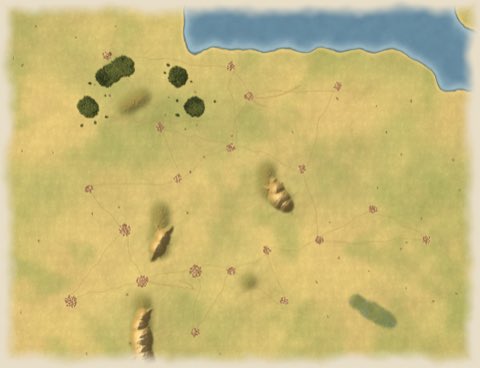
The cost. About 180,000 Soviet soldiers dead or missing. About 400,000 German casualties. It was the worst defeat in German military history.

The Invasionsfront battle map

Stage 13 of 17 · 1944

Normandy

Invasionsfront

They have come, and they have come to Normandy. By nightfall there are Americans on the beaches east of the Cotentin and British in front of Caen, and the sea behind them is solid with ships. The armoured reserve was held back on the Fuehrer's order and is only now on the road, under an air force that owns the daylight. The invasion must be contained in the hedgerows. Hold Caen, the hinge of the whole front. Hold Carentan and St-Lô to keep the beachheads apart, Cherbourg to deny them a port, and Falaise behind it all.
Date
6 June 1944
Turns
13
You command
German forces, 21 units and 3 attached
Against
Allied forces, 15 units
To win
Hold at least 4 of the 5 objectives when turn 13 ends; hold all of them for a decisive victory.
Objectives
Cherbourg, Carentan, Caen, St-Lô and Falaise
Weather
Clear
Reinforcements
0 for you, 6 for the enemy, arriving during the battle
In a match
Even

Next: Defence of the Reich.

What really happened

The Battle of Normandy

6 June to 25 August 1944

On 6 June 1944 about 156,000 Allied troops landed in Normandy, by sea on five beaches and by air behind them. The fight in the hedgerows and around Caen lasted far longer than planned. American forces broke out at St-Lô in late July, and much of the German army in Normandy was destroyed in the Falaise pocket. Paris was free by 25 August.

The cost. More than 200,000 Allied casualties and about 300,000 or more German. Some 20,000 French civilians were killed.

The Die Wacht am Rhein battle map

Stage 14 of 17 · 1944

Defence of the Reich

Die Wacht am Rhein

France is lost and the enemy stands on the frontier of the Reich. In the north British armour is driving for the Rhine bridges behind a carpet of parachutists; in the centre the Americans are at the gates of Aachen, the first German city; in the south Patton is in front of Metz. But their supply lines run all the way back to Normandy, and the Westwall, neglected for four years, is manned again. Hold the bridge at Arnhem. Hold Aachen and Cologne behind it. Hold Metz. If the Rhine holds until winter, there will be time for one more throw.
Date
17 September 1944
Turns
13
You command
German forces, 21 units and 2 attached
Against
Allied forces, 24 units
To win
Hold at least 2 of the 4 objectives when turn 13 ends; hold all of them for a decisive victory.
Objectives
Arnhem, Cologne, Aachen and Metz
Weather
Clear
Reinforcements
0 for you, 8 for the enemy, arriving during the battle
In a match
Even

A decisive victory leads to Ardennes; any other result to Vistula.

What really happened

Operation Market Garden

17 to 25 September 1944

Montgomery's plan dropped three airborne divisions to seize the bridges of the Netherlands, with British armour racing up a single road to join them. Most bridges around Eindhoven and the bridge at Nijmegen were won, but the road was too slow and two SS panzer divisions lay at Arnhem. The British paratroops there held out for nine days. Fewer than a quarter got out.

The cost. About 17,000 Allied and between 3,000 and 13,000 German casualties. In the famine that followed in the occupied Netherlands, about 20,000 people died.

The Herbstnebel battle map

Stage 15 of 17 · 1944

Ardennes

Herbstnebel

One more throw. Three armies have been gathered in secret behind the Eifel and at dawn they go through the Ardennes, the same forest roads as in 1940, against four tired American divisions. The plan is to split the Allied front and reach the Meuse before the sky clears and before the enemy can move. Everything depends on the road junctions: St. Vith in the north, Bastogne in the south, and Marche beyond them on the way to the river. There is fuel for half the distance. The rest must be captured.
Date
16 December 1944
Turns
19 (decisive by turn 14)
You command
German forces, 21 units and 3 attached
Against
Allied forces, 14 units
To win
Take all 3 objectives by the end of turn 19; take them by turn 14 for a decisive victory.
Objectives
St. Vith, Bastogne and Marche
Weather
Snow
Reinforcements
0 for you, 12 for the enemy, arriving during the battle
In a match
Axis side Favoured, Allied side a Hard Challenge

Next: Berlin.

What really happened

The Battle of the Bulge

16 December 1944 to 25 January 1945

Three German armies attacked through the Ardennes on 16 December 1944, under low cloud that kept Allied aircraft on the ground. St. Vith held out for days and fell on 21 December, and Bastogne was surrounded but never taken. German spearheads ran out of fuel short of the Meuse. When the skies cleared, the attack was doomed.

The cost. About 19,000 Americans killed, among some 89,000 casualties. Between 67,000 and 125,000 German casualties. About 3,000 Belgian and Luxembourg civilians died.

The Die Weichsel battle map

Stage 15 of 17 · 1945

Vistula

Die Weichsel

The front has stood on the Vistula since the summer, and the Red Army has used every week of it. Opposite the bridgeheads at Magnuszew and Sandomierz it has massed five men for every one of ours, five tanks, seven guns. The armour that might have met them went to the Ardennes. When the barrage lifts, what is left of the line must hold long enough for the reserves to form behind it. Warsaw, Lodz, Krakow, Poznan: every one that stands is a week bought for the Oder.
Date
12 January 1945
Turns
15
You command
German forces, 19 units and 3 attached
Against
Soviet forces, 25 units
To win
Hold at least 3 of the 4 objectives when turn 15 ends; hold all of them for a decisive victory.
Objectives
Warsaw, Lodz, Krakow and Poznan
Weather
Snow
Reinforcements
0 for you, 11 for the enemy, arriving during the battle
In a match
Axis side Favoured, Allied side a Challenge

Next: Berlin.

What really happened

The Vistula-Oder Offensive

12 January to 2 February 1945

From bridgeheads on the Vistula, the Red Army attacked on 12 January 1945 with an overwhelming advantage in men, tanks and guns. Warsaw, by then a ruined city, was freed on 17 January. Soviet troops reached Auschwitz on 27 January. By early February they were on the Oder, some 70 kilometres from Berlin. Fortress Poznan held out until 23 February.

The cost. About 194,000 Soviet casualties. Hundreds of thousands of German casualties and prisoners, while millions of German civilians fled west.

The Die Schlacht um Berlin battle map

Stage 16 of 17 · 1945

Berlin

Die Schlacht um Berlin

Two and a half million men are on the Oder. Between them and the capital lie the Seelow Heights, the last high ground in the east, and behind the heights a city of rubble garrisoned by boys and old men. Zhukov comes straight up the highway from Küstrin; Konev is swinging in from the south; a third army will come down from the north. There is no reserve and no relief. Hold the Heights. Hold the government quarter at the Reichstag, the airfield at Tempelhof, and Potsdam. Every day the city stands is a day for the columns of refugees still moving west.
Date
16 April 1945
Turns
8
You command
German forces, 18 units and 7 attached
Against
Soviet forces, 16 units
To win
Hold at least 3 of the 4 objectives when turn 8 ends; hold all of them for a decisive victory.
Objectives
Seelow, Reichstag, Tempelhof and Potsdam
Weather
Clear
Reinforcements
0 for you, 6 for the enemy, arriving during the battle
In a match
Axis side Favoured, Allied side a Challenge

A decisive victory opens the road to Washington; any other result ends the campaign here.

What really happened

The Battle of Berlin

16 April to 2 May 1945

The Red Army attacked over the Oder on 16 April 1945 and took the Seelow Heights after three days of costly assaults. By 25 April Berlin was surrounded, and the old men and boys of its last defence were fighting in the streets. Hitler killed himself on 30 April. The city surrendered on 2 May, and Germany on 8 May.

The cost. About 81,000 Soviet and Polish dead. Perhaps 100,000 German soldiers dead, and as many as 125,000 civilians.

The Unternehmen Amerika battle map

Stage 17 of 17 · 1945

Washington

Unternehmen Amerika

It was never in any plan. But Britain is beaten, Russia has made peace, and the Atlantic belongs to the U-boats; and so, on a summer morning that no staff college ever taught, the landing craft run in on the beaches of the Chesapeake. The Americans have had two years to prepare and have the factories of a continent at their backs. Take the naval base at Norfolk for a harbour, Baltimore and Richmond to hold the flanks, and then the city on the Potomac. It must be done before the armies now crossing the mountains arrive.
Date
4 July 1945
Turns
15 (decisive by turn 10)
You command
German forces, 16 units
Against
American forces, 24 units
To win
Take all 4 objectives by the end of turn 15; take them by turn 10 for a decisive victory.
Objectives
Norfolk, Baltimore, Washington and Richmond
Weather
Clear
Reinforcements
6 for you, 7 for the enemy, arriving during the battle
In a match
Allied side Favoured, Axis side a Challenge

The last battle of the campaign.

What really happened

The invasion of America

This never happened · never fought

No Axis army ever reached the American mainland, though Japan held two Alaskan islands in 1942 and 1943. Germany had no fleet that could have carried an army across the Atlantic, and by 1945 it could not even defend its own cities. Germany surrendered on 8 May 1945, eight weeks before the date of this battle. Twelve days after that date, the first atomic bomb was tested in New Mexico.

1940 – 1945

The Western Allies

Dunkirk to the Elbe

You command the British and American army: 13 battles over 13 stages, starting with 150 prestige. Battles at the same stage are alternatives: which one you fight depends on how you won the battle before.

13 battles

The Operation Dynamo battle map

Stage 1 of 13 · 1940

Dunkirk

Operation Dynamo

The panzers have reached the Channel and the British Expeditionary Force is cut off in Flanders with its back to the sea. The army is to be taken off the beaches at Dunkirk, and every hour the perimeter holds is another division saved. Hold the port, the canal line at Bergues and Furnes, and the hill town of Cassel to the south for as long as you can. Ground can be given up; the army cannot.
Date
26 May 1940
Turns
10
You command
British and French forces, 12 units and 3 attached
Against
German forces, 17 units
To win
Hold at least 2 of the 4 objectives when turn 10 ends; hold all of them for a decisive victory.
Objectives
Dunkirk, Bergues, Furnes and Cassel
Weather
Clear
Reinforcements
0 for you, 5 for the enemy, arriving during the battle
In a match
Allied side Favoured, Axis side a Hard Challenge

Next: Operation Crusader.

What really happened

The evacuation of Dunkirk

26 May to 4 June 1940

With the British Expeditionary Force and French armies trapped against the Channel, the Royal Navy began Operation Dynamo on 26 May. A German halt order and a stubborn rearguard bought time. Destroyers, ferries and hundreds of small civilian boats lifted about 338,000 men from the harbour mole and the beaches before Dunkirk fell on 4 June.

The cost. About 240 vessels sunk. About 40,000 French troops, many of them from the rearguard, were captured when the town fell.

The Operation Crusader battle map

Stage 2 of 13 · 1941

Operation Crusader

Operation Crusader

Tobruk has been besieged since April, a thorn in Rommel's side that he cannot pull out. The Eighth Army is now strong enough to raise the siege. Swing round the frontier wire, break through the escarpment at Sidi Rezegh and join hands with the garrison, then clear the coast road to Gambut and Bardia. Rommel's panzers will come at you the moment you move. Keep your armour together: the desert punishes anyone who fights in penny packets.
Date
18 November 1941
Turns
13 (decisive by turn 10)
You command
British forces, 17 units and 3 attached
Against
German and Italian forces, 17 units
To win
Take all 4 objectives by the end of turn 13; take them by turn 10 for a decisive victory.
Objectives
Tobruk, Sidi Rezegh, Gambut and Bardia
Weather
Clear
Reinforcements
0 for you, 2 for the enemy, arriving during the battle
In a match
Allied side Favoured, Axis side a Challenge

A decisive victory leads to El Alamein; any other result to Alam Halfa.

What really happened

Operation Crusader

18 November 1941 to early January 1942

The Eighth Army crossed into Libya on 18 November 1941 to relieve the besieged garrison of Tobruk. Sidi Rezegh airfield changed hands in a confused and costly tank battle, and Rommel's dash for the frontier nearly broke British nerve. But the Eighth Army kept going. Rommel withdrew in December, all the way back to El Agheila.

The cost. About 38,000 Axis and 18,000 British and Commonwealth casualties.

The Alam Halfa battle map

Stage 3 of 13 · 1942

Alam Halfa

Alam Halfa

Rommel has chased the Eighth Army back to the last line before Alexandria: forty miles between the sea and the impassable Qattara Depression. He is short of fuel and knows that time is against him, so he will strike now, in the south, and swing north behind the line. The new army commander has guessed where. Hold the Alam Halfa ridge, Ruweisat and the coast at El Alamein. Let him come to you and break himself on dug-in guns.
Date
30 August 1942
Turns
9
You command
British forces, 16 units and 2 attached
Against
German and Italian forces, 17 units
To win
Hold at least 3 of the 4 objectives when turn 9 ends; hold all of them for a decisive victory.
Objectives
El Alamein, Ruweisat, Alam Halfa and El Hammam
Weather
Clear
Reinforcements
0 for you, 2 for the enemy, arriving during the battle
In a match
Allied side Favoured, Axis side a Hard Challenge

Next: El Alamein.

What really happened

The Battle of Alam Halfa

30 August to 5 September 1942

Rommel attacked through the southern minefields on the night of 30 August 1942, hoping to swing behind the Eighth Army. He was short of fuel and the mines slowed him badly. Montgomery, newly in command, had dug in tanks along the Alam Halfa ridge and would not be drawn out. Under constant air attack, Rommel withdrew within a week.

The cost. About 2,900 Axis and 1,750 British and Commonwealth casualties.

The El Alamein battle map

Stage 4 of 13 · 1942

El Alamein

El Alamein

Now it is the Eighth Army's turn. Behind half a million mines in the 'Devil's Gardens' the Axis waits, short of fuel but dug in deep. There is no way round: the sea is on one flank and the Depression on the other. A thousand guns will open the battle; the infantry must clear lanes through the minefields at Kidney Ridge and Tel el Eisa, and the armour must pass through and break out along the coast road. It will be a slogging match. Win it.
Date
23 October 1942
Turns
11 (decisive by turn 8)
You command
British forces, 18 units and 2 attached
Against
German and Italian forces, 18 units
To win
Take all 4 objectives by the end of turn 11; take them by turn 8 for a decisive victory.
Objectives
Sidi Abd el Rahman, Tel el Eisa, Kidney Ridge and Deir el Shein
Weather
Clear
Reinforcements
0 for you, 2 for the enemy, arriving during the battle
In a match
Even

A decisive victory leads to Tunisia; any other result to Kasserine Pass.

What really happened

The Second Battle of El Alamein

23 October to 4 November 1942

The Eighth Army's barrage opened on the night of 23 October 1942. Montgomery wore down the Axis line in twelve days of hard fighting through deep minefields, then broke through with Operation Supercharge on 2 November. Rommel, short of fuel and tanks, began to retreat. Within days the Allies landed in French North Africa, and he never returned to Egypt.

The cost. About 13,500 British and Commonwealth casualties. Axis losses are uncertain: at least 37,000, including some 30,000 captured.

The Kasserine Pass battle map

Stage 5 of 13 · 1943

Kasserine Pass

Kasserine Pass

The Americans are in their first great battle, and it is going badly. Rommel and von Arnim have broken through at Faid and Sidi Bou Zid, and the panzers are driving west for the passes of the Western Dorsal. Beyond Kasserine lies the supply base at Tebessa, and beyond that the whole Allied position in North Africa. Hold Sbeitla as long as you can, then hold the pass and the roads to Thala and Tebessa. British armour is on its way.
Date
19 February 1943
Turns
10
You command
American, British and French forces, 16 units and 2 attached
Against
German and Italian forces, 16 units
To win
Hold at least 2 of the 4 objectives when turn 10 ends; hold all of them for a decisive victory.
Objectives
Sbeitla, Kasserine, Thala and Tebessa
Weather
Clear
Reinforcements
0 for you, 3 for the enemy, arriving during the battle
In a match
Allied side Favoured, Axis side a Challenge

Next: Tunisia.

What really happened

The Battle of Kasserine Pass

19 to 25 February 1943

In the first major clash between American and German troops, Rommel's armour broke through the Kasserine Pass on 20 February 1943 and routed green American units. British and American guns stopped the drive short of Thala and Tebessa, and Rommel withdrew. The US Army sacked commanders, overhauled its methods, and gave George Patton command of its corps in Tunisia.

The cost. About 6,500 American casualties, and almost 10,000 Allied in all. About 2,000 Axis casualties.

The Operation Vulcan battle map

Stage 6 of 13 · 1943

Tunisia

Operation Vulcan

The Axis armies in Africa are penned into the north-east corner of Tunisia with their backs to the sea, and the Allied navies have closed it. Two hundred and fifty thousand men are waiting to be destroyed or to surrender. The Americans will drive on Mateur and Bizerte; the British will break through at Medjez el Bab for Tunis, and the Eighth Army will push up the coast from Enfidaville. Finish it.
Date
22 April 1943
Turns
12 (decisive by turn 9)
You command
British, American and French forces, 19 units and 2 attached
Against
German and Italian forces, 17 units
To win
Take all 4 objectives by the end of turn 12; take them by turn 9 for a decisive victory.
Objectives
Tunis, Bizerte, Mateur and Enfidaville
Weather
Clear
Reinforcements
0 for you, 1 for the enemy, arriving during the battle
In a match
Allied side Favoured, Axis side a Challenge

Next: Sicily.

What really happened

The end in Tunisia

22 April to 13 May 1943

With the Axis armies penned into north-east Tunisia, the Allies launched their final offensive on 22 April 1943. Bitter fighting in the hills gave way to a breakthrough, and British armoured cars entered Tunis on 7 May as American troops took Bizerte. With the sea closed behind them, the remaining Axis forces surrendered on 13 May.

The cost. About 250,000 Axis troops captured, far more than the 91,000 who surrendered at Stalingrad. About 76,000 Allied casualties in the whole Tunisian campaign.

The Operation Husky battle map

Stage 7 of 13 · 1943

Sicily

Operation Husky

The largest seaborne invasion yet attempted is ashore in Sicily: the Americans at Gela and Licata, the British at Syracuse. Italy is wavering, and the island is the first step back into Europe. Drive inland to the road junction at Enna, take Catania and Palermo, and beat the Germans to Messina before they slip across the straits to the mainland.
Date
10 July 1943
Turns
10 (decisive by turn 8)
You command
American and British forces, 14 units
Against
German and Italian forces, 18 units
To win
Take all 4 objectives by the end of turn 10; take them by turn 8 for a decisive victory.
Objectives
Palermo, Messina, Catania and Enna
Weather
Clear
Reinforcements
8 for you, 0 for the enemy, arriving during the battle
In a match
Allied side Favoured, Axis side a Challenge

Next: Anzio.

What really happened

The invasion of Sicily

10 July to 17 August 1943

Operation Husky landed Patton's Seventh Army and Montgomery's Eighth Army on 10 July 1943. Patton swept west to Palermo while the British fought slowly past Etna. On 25 July Mussolini was overthrown. Patton reached Messina on 17 August, but the Axis had already taken more than 100,000 men and much equipment across the strait.

The cost. About 25,000 Allied casualties. About 165,000 Axis casualties, most of them Italian prisoners.

The Anzio battle map

Stage 8 of 13 · 1944

Anzio

Anzio

The landing at Anzio was meant to outflank the Gustav Line and open the road to Rome. Instead the beachhead sits under the guns of the Alban Hills, and now the Germans have gathered four divisions to throw it back into the sea. Their attack comes straight down the Albano road through the factory at Aprilia. Hold Aprilia if you can, and Anzio and Nettuno whatever happens.
Date
16 February 1944
Turns
8
You command
American and British forces, 17 units
Against
German forces, 21 units
To win
Hold at least 2 of the 3 objectives when turn 8 ends; hold all of them for a decisive victory.
Objectives
Aprilia, Anzio and Nettuno
Weather
Clear
Reinforcements
5 for you, 0 for the enemy, arriving during the battle
In a match
Even

Next: Normandy.

What really happened

The Anzio beachhead

22 January to 4 June 1944

Allied troops landed at Anzio on 22 January 1944, but paused to dig in instead of driving inland. On 16 February the German counter-attack, Operation Fischfang, drove down the road from Albano and came close to splitting the beachhead. Massed guns and naval fire stopped it. The stalemate lasted until May, and Rome fell on 4 June.

The cost. About 43,000 Allied and 40,000 German casualties in the whole battle.

The Overlord battle map

Stage 9 of 13 · 1944

Normandy

Overlord

D-Day. Five divisions are ashore in Normandy, and behind them the greatest fleet ever assembled. The Germans will be fighting for every hedgerow. Take Carentan to join the beaches, then Cherbourg for its port, Caen and St-Lô for the roads inland, and close the pocket at Falaise. Once the armies are out of the bocage, nothing in France can stop them.
Date
6 June 1944
Turns
13 (decisive by turn 11)
You command
American and British forces, 15 units
Against
German forces, 24 units
To win
Take all 5 objectives by the end of turn 13; take them by turn 11 for a decisive victory.
Objectives
Cherbourg, Carentan, Caen, St-Lô and Falaise
Weather
Clear
Reinforcements
6 for you, 0 for the enemy, arriving during the battle
In a match
Allied side Favoured, Axis side a Hard Challenge

Next: Market Garden.

What really happened

The Battle of Normandy

6 June to 25 August 1944

On 6 June 1944 about 156,000 Allied troops landed in Normandy, by sea on five beaches and by air behind them. The fight in the hedgerows and around Caen lasted far longer than planned. American forces broke out at St-Lô in late July, and much of the German army in Normandy was destroyed in the Falaise pocket. Paris was free by 25 August.

The cost. More than 200,000 Allied casualties and about 300,000 or more German. Some 20,000 French civilians were killed.

The Market Garden battle map

Stage 10 of 13 · 1944

Market Garden

Market Garden

The German armies have been routed from France and the Allies have reached the frontier of the Reich. One bold stroke might end the war by Christmas: airborne divisions are to seize the bridges up to Arnhem on the Lower Rhine, while the armour drives up the single road to join them. To the south, the Americans must break the West Wall at Aachen and take Metz. Take Arnhem, Aachen, Cologne and Metz before the autumn rains.
Date
17 September 1944
Turns
13 (decisive by turn 10)
You command
American and British forces, 20 units and 4 attached
Against
German forces, 23 units
To win
Take all 4 objectives by the end of turn 13; take them by turn 10 for a decisive victory.
Objectives
Arnhem, Cologne, Aachen and Metz
Weather
Clear
Reinforcements
8 for you, 0 for the enemy, arriving during the battle
In a match
Allied side Favoured, Axis side a Challenge

A decisive victory leads to The Rhine; any other result to The Bulge.

What really happened

Operation Market Garden

17 to 25 September 1944

Montgomery's plan dropped three airborne divisions to seize the bridges of the Netherlands, with British armour racing up a single road to join them. Most bridges around Eindhoven and the bridge at Nijmegen were won, but the road was too slow and two SS panzer divisions lay at Arnhem. The British paratroops there held out for nine days. Fewer than a quarter got out.

The cost. About 17,000 Allied and between 3,000 and 13,000 German casualties. In the famine that followed in the occupied Netherlands, about 20,000 people died.

The Battle of the Bulge battle map

Stage 11 of 13 · 1944

The Bulge

Battle of the Bulge

Out of the fog and snow of the Ardennes, where no one expected it, come two panzer armies. The front has broken. The Germans are making for the Meuse and Antwerp beyond it, and between them and the river lie a few road junctions: St. Vith, Bastogne and Marche. The airborne are on their way by truck. Hold the crossroads until the skies clear and the counter-attack can come.
Date
16 December 1944
Turns
11
You command
American forces, 14 units
Against
German forces, 24 units
To win
Hold at least 2 of the 3 objectives when turn 11 ends; hold all of them for a decisive victory.
Objectives
St. Vith, Bastogne and Marche
Weather
Snow
Reinforcements
12 for you, 0 for the enemy, arriving during the battle
In a match
Axis side Favoured, Allied side a Challenge

Next: The Rhine.

What really happened

The Battle of the Bulge

16 December 1944 to 25 January 1945

Three German armies attacked through the Ardennes on 16 December 1944, under low cloud that kept Allied aircraft on the ground. St. Vith held out for days and fell on 21 December, and Bastogne was surrounded but never taken. German spearheads ran out of fuel short of the Meuse. When the skies cleared, the attack was doomed.

The cost. About 19,000 Americans killed, among some 89,000 casualties. Between 67,000 and 125,000 German casualties. About 3,000 Belgian and Luxembourg civilians died.

The Crossing the Rhine battle map

Stage 12 of 13 · 1945

The Rhine

Crossing the Rhine

The last great barrier before Germany is the Rhine. Upstream at Remagen the Americans have already seized a bridge, by luck and nerve; downstream at Wesel the river is to be crossed in strength, with airborne divisions dropped on the far bank. Take both bridgeheads, break out, and close a ring around the Ruhr at Lippstadt. The industrial heart of Germany is the prize, and its fall will end the war in the west.
Date
22 March 1945
Turns
13 (decisive by turn 10)
You command
American and British forces, 20 units and 2 attached
Against
German forces, 20 units
To win
Take all 4 objectives by the end of turn 13; take them by turn 10 for a decisive victory.
Objectives
Wesel, Remagen, Essen and Lippstadt
Weather
Clear
Reinforcements
0 for you, 4 for the enemy, arriving during the battle
In a match
Allied side Favoured, Axis side a Hard Challenge

A decisive victory opens the road to Race for Berlin; any other result ends the campaign here.

What really happened

Crossing the Rhine

22 March to 18 April 1945

American troops had seized the bridge at Remagen on 7 March 1945. Patton crossed at Oppenheim on 22 March. The next night Montgomery's Operation Plunder crossed at Wesel, and a huge airborne drop followed the next morning. The two arms of the advance met at Lippstadt on 1 April, surrounding the Ruhr, the industrial heart of Germany.

The cost. About 317,000 German troops captured in the Ruhr pocket, which surrendered by 18 April.

The The Race for Berlin battle map

Stage 13 of 13 · 1945

Race for Berlin

The Race for Berlin

The armies have reached the Elbe at Magdeburg, sixty miles from Berlin, and the Red Army has not yet crossed the Oder. For a few days the German capital is closer to you than to them. Supreme Command has stopped at the river; this is the war as it might have been had it not. Force the Elbe, drive through Brandenburg and Potsdam, and be in Berlin first. What remains of the Wehrmacht in the west stands in the way.
Date
12 April 1945
Turns
11 (decisive by turn 8)
You command
American and British forces, 20 units and 2 attached
Against
German forces, 17 units
To win
Take all 4 objectives by the end of turn 11; take them by turn 8 for a decisive victory.
Objectives
Magdeburg, Brandenburg, Potsdam and Berlin
Weather
Clear
Reinforcements
0 for you, 4 for the enemy, arriving during the battle
In a match
Allied side Favoured, Axis side a Challenge

The last battle of the campaign.

What really happened

The race for Berlin

April 1945 · never fought

American troops reached the Elbe near Magdeburg on 11 April 1945, about 100 kilometres from Berlin. Eisenhower halted them there. Berlin lay in the agreed Soviet zone, and he judged it not worth the likely cost. The Red Army took the city in a battle that ended on 2 May.

1941 – 1945

The Red Army

From the frontier to the Reichstag

You command the Soviet army: 12 battles over 12 stages, starting with 150 prestige. Battles at the same stage are alternatives: which one you fight depends on how you won the battle before.

12 battles

The Border Battles battle map

Stage 1 of 12 · 1941

The Frontier

Border Battles

At dawn the Germans attacked along the whole frontier, without warning and without a declaration of war. The armies of the frontier districts are being cut off and destroyed one by one. Fall back and hold what you can: Minsk, Smolensk and Kiev. Every day the panzers are held up is another day for the country to mobilise. Do not lose the army.
Date
22 June 1941
Turns
13
You command
Soviet forces, 18 units and 12 attached
Against
German forces, 25 units
To win
Hold at least 2 of the 3 objectives when turn 13 ends; hold all of them for a decisive victory.
Objectives
Smolensk, Minsk and Kiev
Weather
Clear; rain from turn 12
In a match
Axis side Favoured, Allied side a Challenge

Next: Moscow.

What really happened

Operation Barbarossa

22 June to December 1941

The largest invasion in history began on 22 June 1941. Three German army groups took the Red Army by surprise. Minsk fell within a week and Smolensk by mid-July, and vast encirclements took prisoners by the hundred thousand. But the Soviet Union did not collapse, and by autumn the German timetable had slipped.

The cost. About 200,000 German dead by December. More than 800,000 Soviet soldiers dead and over 3 million captured, most of whom died in captivity. Behind the front, SS killing squads began the mass murder of Soviet Jews.

The The Defence of Moscow battle map

Stage 2 of 12 · 1941

Moscow

The Defence of Moscow

Operation Typhoon: the Germans have gathered everything they have for one last drive on the capital before winter. Vyazma is surrounded, the government is leaving for Kuibyshev, and the Siberian divisions are still on the trains. Hold Moscow. Hold Kalinin, Vyazma and Tula as long as they can be held. The autumn mud is your ally, and General Winter is coming.
Date
2 October 1941
Turns
21
You command
Soviet forces, 18 units and 2 attached
Against
German forces, 20 units
To win
Hold at least 2 of the 4 objectives when turn 21 ends; hold all of them for a decisive victory.
Objectives
Kalinin, Vyazma, Moscow and Tula
Weather
Clear; rain from turn 5; mud from turn 8; snow from turn 12
Reinforcements
3 for you, 0 for the enemy, arriving during the battle
In a match
Allied side Favoured, Axis side a Challenge

Next: Winter Counter-Offensive.

What really happened

The Battle of Moscow

2 October 1941 to 7 January 1942

Operation Typhoon opened on 2 October with huge encirclements at Vyazma and Bryansk. Then the autumn rain turned the roads to mud, and the frost that followed froze engines and guns. Tula never fell. German patrols came within about 30 kilometres of the Kremlin, and on 5 December the Red Army, reinforced from the east, struck back.

The cost. Estimates run from 650,000 to over a million Soviet casualties, and 170,000 to 400,000 German.

The The Winter Counter-Offensive battle map

Stage 3 of 12 · 1941

Winter Counter-Offensive

The Winter Counter-Offensive

Forty degrees of frost. The German army at the gates of Moscow is frozen in summer uniforms, its tanks will not start and its men have not slept indoors for weeks. The fresh divisions from Siberia are ready. Strike now, everywhere: retake Klin and Kalinin in the north, Kaluga in the south, and drive the invader back from the capital. Do not stop to besiege the strongpoints: go round them.
Date
5 December 1941
Turns
13 (decisive by turn 10)
You command
Soviet forces, 18 units and 3 attached
Against
German forces, 17 units
To win
Take all 4 objectives by the end of turn 13; take them by turn 10 for a decisive victory.
Objectives
Kalinin, Klin, Kaluga and Mozhaisk
Weather
Snow; clear from turn 3; snow from turn 8; clear from turn 10
Reinforcements
0 for you, 2 for the enemy, arriving during the battle
In a match
Even

Next: Kharkov.

What really happened

The Moscow counter-offensive

5 December 1941 to 20 January 1942

On 5 December, with the German army exhausted and frozen outside Moscow, the Red Army counter-attacked on a wide front. Klin and Kalinin were retaken in mid-December. Hitler ordered his troops to stand fast and dismissed several senior generals. By January the Germans had been pushed back as much as 250 kilometres, but the line did not break.

The cost. About 370,000 Soviet casualties in the counter-offensive. Well over 100,000 German casualties, many from frostbite.

The Second Kharkov battle map

Stage 4 of 12 · 1942

Kharkov

Second Kharkov

The front has held through the winter and the Stavka believes the enemy is weak in the south. From the Izyum salient, two shock armies will strike north and west, take Lozovaya and Barvenkovo, and roll on to Kharkov. But the salient has a narrow neck, and the Germans are gathering on its flanks. Move fast. Keep the neck open behind you.
Date
12 May 1942
Turns
10
You command
Soviet forces, 19 units and 2 attached
Against
German forces, 22 units
To win
Hold at least 2 of the 3 objectives when turn 10 ends; hold all of them for a decisive victory.
Objectives
Izyum, Lozovaya and Barvenkovo
Weather
Clear
Reinforcements
5 for you, 0 for the enemy, arriving during the battle
In a match
Axis side Favoured, Allied side a Challenge

Next: Stalingrad.

What really happened

The Second Battle of Kharkov

12 to 28 May 1942

On 12 May the Red Army attacked out of the Izyum salient to retake Kharkov. Five days later Kleist's armour struck the base of the salient from the south, under the plan called Fridericus. Stalin refused to halt the offensive until too late. By 22 May the pocket was closed, and the road to Stalingrad and the Caucasus lay open.

The cost. About 277,000 Soviet casualties, some 171,000 of them killed, missing or captured. About 20,000 to 30,000 German casualties.

The Stalingrad battle map

Stage 5 of 12 · 1942

Stalingrad

Stalingrad

Not one step back. The German Sixth Army has reached the Volga, and the city that bears Stalin's name is being fought for street by street, house by house. Behind you is the river and nothing else. Hold the Tractor Works, the city centre and Beketovka. Make the enemy pay for every ruin. Far to the north and south, the Stavka is gathering armies for something greater.
Date
13 September 1942
Turns
15
You command
Soviet forces, 18 units and 1 attached
Against
German forces, 22 units
To win
Hold at least 2 of the 3 objectives when turn 15 ends; hold all of them for a decisive victory.
Objectives
Tractor Works, Stalingrad and Beketovka
Weather
Clear; rain from turn 12
Reinforcements
3 for you, 0 for the enemy, arriving during the battle
In a match
Axis side Favoured, Allied side a Challenge

Next: Operation Uranus.

What really happened

The Battle of Stalingrad

23 August 1942 to 2 February 1943

The Sixth Army reached the Volga on 23 August, the day German bombers set the city ablaze. The fight went on street by street and factory by factory, with the Soviet 62nd Army clinging to a strip along the river. From 19 November two Soviet pincers encircled the attackers. The last of them surrendered on 2 February 1943.

The cost. More than a million Soviet casualties. About 800,000 Axis casualties, with 91,000 taken prisoner, of whom about 6,000 came home. Tens of thousands of civilians died.

The Operation Uranus battle map

Stage 6 of 12 · 1942

Operation Uranus

Operation Uranus

The Sixth Army has spent itself in Stalingrad, and its flanks are held by worn-out divisions on the open steppe. At dawn the guns open on the Don bridgeheads in the north; tomorrow the armies south of the city strike west. The two pincers are to meet at Kalach, on the Don, and close the ring round three hundred thousand men. Take the bridge at Kalach, Surovikino and Sovetsky, and the station at Abganerovo. Do not stop.
Date
19 November 1942
Turns
12 (decisive by turn 9)
You command
Soviet forces, 20 units and 2 attached
Against
German and Romanian forces, 18 units
To win
Take all 4 objectives by the end of turn 12; take them by turn 9 for a decisive victory.
Objectives
Kalach, Surovikino, Sovetsky and Abganerovo
Weather
Clear; snow from turn 7; clear from turn 9
Reinforcements
0 for you, 2 for the enemy, arriving during the battle
In a match
Allied side Favoured, Axis side a Hard Challenge

A decisive victory leads to Little Saturn; any other result to Kursk.

What really happened

Operation Uranus

19 to 23 November 1942

On 19 November 1942, Soviet armies broke through the Romanian Third Army north of Stalingrad, and the next day struck south of the city. Tanks seized the Don bridge at Kalach by a ruse on 22 November. The two arms met near Sovetsky the next day, closing the ring around the German Sixth Army in only four days.

The cost. The Romanian Third and Fourth Armies were shattered. More than 250,000 Axis troops were trapped in the pocket.

The Operation Little Saturn battle map

Stage 7 of 12 · 1943

Little Saturn

Operation Little Saturn

The Sixth Army is trapped in Stalingrad and the whole southern wing of the German front is reeling. Now drive west across the Don basin, take Rostov and close the door on the armies in the Caucasus, then roll on to the Donets: Stalino, Zaporozhye, Kharkov. The enemy has no reserves left. Keep moving, and the war in the south can be won this winter.
Date
16 December 1942
Turns
20 (decisive by turn 16)
You command
Soviet forces, 19 units and 2 attached
Against
German and Italian forces, 18 units
To win
Take all 4 objectives by the end of turn 20; take them by turn 16 for a decisive victory.
Objectives
Kharkov, Stalino, Zaporozhye and Rostov
Weather
Snow; mud from turn 13
Reinforcements
7 for you, 0 for the enemy, arriving during the battle
In a match
Axis side Favoured, Allied side a Hard Challenge

Next: Kursk.

What really happened

Operation Little Saturn

16 to 30 December 1942, with follow-on offensives to February 1943

Operation Little Saturn struck the Italian Eighth Army on the middle Don on 16 December 1942, ending any hope of relieving Stalingrad. Tanks raided the airfield at Tatsinskaya that fed the pocket. The Red Army drove on to Rostov and Kharkov in February, but its lines had overstretched, and Manstein's counter-stroke took Kharkov back in March.

The cost. The Italian Eighth Army was destroyed, with about 114,000 men lost. About 95,000 Soviet casualties, more than 20,000 of them killed.

The The Kursk Bulge battle map

Stage 8 of 12 · 1943

Kursk

The Kursk Bulge

For three months the Germans have prepared to pinch off the Kursk salient, and for three months we have known it. Three belts of trenches, minefields and anti-tank guns lie across their path, and the tank armies wait behind them. Let them break themselves on the defences, then meet them at Prokhorovka. Hold Oboyan, Prokhorovka and Kursk.
Date
5 July 1943
Turns
12
You command
Soviet forces, 20 units and 1 attached
Against
German forces, 23 units
To win
Hold at least 2 of the 3 objectives when turn 12 ends; hold all of them for a decisive victory.
Objectives
Prokhorovka, Oboyan and Kursk
Weather
Clear
Reinforcements
3 for you, 0 for the enemy, arriving during the battle
In a match
Axis side Favoured, Allied side a Challenge

Next: The Dnieper.

What really happened

Operation Citadel

5 to 16 July 1943

Operation Citadel attacked both sides of the Kursk bulge on 5 July 1943, into some of the deepest defences ever built. The northern pincer stalled within days. In the south, the armour came close to Prokhorovka, where a vast tank battle was fought on 12 July. With the Allies landing in Sicily and the Red Army striking elsewhere, Hitler called it off.

The cost. About 54,000 German and 178,000 Soviet casualties. It was the last German strategic offensive in the east.

The Battle of the Dnieper battle map

Stage 9 of 12 · 1943

The Dnieper

Battle of the Dnieper

After Kursk the enemy has fallen back to the Dnieper, the great river of the Ukraine, and calls it the Eastern Wall. The west bank is high and the river is wide. But the army is already across in a dozen places, on rafts and fishing boats. Widen the bridgeheads, liberate Kiev, and take Cherkassy, Dnepropetrovsk and the railway at Zhitomir before the wall can be built.
Date
24 September 1943
Turns
12 (decisive by turn 10)
You command
Soviet forces, 19 units and 2 attached
Against
German forces, 21 units
To win
Take all 4 objectives by the end of turn 12; take them by turn 10 for a decisive victory.
Objectives
Kiev, Cherkassy, Dnepropetrovsk and Zhitomir
Weather
Clear
Reinforcements
10 for you, 0 for the enemy, arriving during the battle
In a match
Axis side Favoured, Allied side a Challenge

Next: Bagration.

What really happened

The Battle of the Dnieper

August to December 1943

After Kursk, the Germans fell back behind the Dnieper and called it the Panther Line. It was never finished. Soviet troops crossed the river on rafts and in small boats on a wide front from late September, holding bridgeheads under fire. Kiev was freed on 6 November. A German counter-attack retook Zhitomir, but the line had been broken for good.

The cost. Well over a million Soviet casualties. German losses are uncertain, but ran to hundreds of thousands.

The Operation Bagration battle map

Stage 10 of 12 · 1944

Bagration

Operation Bagration

Three years to the day after the invasion, the reckoning. Army Group Centre is strung out in the forests and marshes of Byelorussia, and Hitler has ordered every town held as a fortress. Good. Encircle Vitebsk and Bobruisk, take Mogilev, and drive the tank armies on to Minsk. Destroy Army Group Centre.
Date
22 June 1944
Turns
8 (decisive by turn 7)
You command
Soviet forces, 16 units
Against
German forces, 22 units
To win
Take all 4 objectives by the end of turn 8; take them by turn 7 for a decisive victory.
Objectives
Vitebsk, Mogilev, Bobruisk and Minsk
Weather
Clear
Reinforcements
5 for you, 0 for the enemy, arriving during the battle
In a match
Allied side Favoured, Axis side a Challenge

Next: Vistula–Oder.

What really happened

Operation Bagration

22 June to 19 August 1944

On 22 June 1944, three years to the day after the invasion, the Red Army attacked Army Group Centre. Hitler's orders to hold fixed fortress towns left whole corps to be surrounded at Vitebsk and Bobruisk. Minsk was freed on 3 July. In two months the front moved some 500 kilometres west, to the edge of Warsaw.
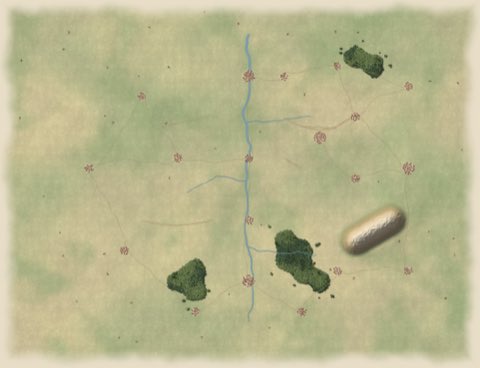
The cost. About 180,000 Soviet soldiers dead or missing. About 400,000 German casualties. It was the worst defeat in German military history.

The The Vistula–Oder Offensive battle map

Stage 11 of 12 · 1945

Vistula–Oder

The Vistula–Oder Offensive

From the bridgeheads on the Vistula the Red Army will strike for Germany itself. Liberate Warsaw, Lodz and Krakow, take the fortress of Poznan, and drive on to the Oder, forty miles from Berlin. The enemy has nothing left in reserve but what it can scrape together. Speed decides everything.
Date
12 January 1945
Turns
12 (decisive by turn 10)
You command
Soviet forces, 20 units and 5 attached
Against
German forces, 22 units
To win
Take all 4 objectives by the end of turn 12; take them by turn 10 for a decisive victory.
Objectives
Warsaw, Lodz, Krakow and Poznan
Weather
Snow
Reinforcements
11 for you, 0 for the enemy, arriving during the battle
In a match
Axis side Favoured, Allied side a Challenge

Next: Berlin.

What really happened

The Vistula-Oder Offensive

12 January to 2 February 1945

From bridgeheads on the Vistula, the Red Army attacked on 12 January 1945 with an overwhelming advantage in men, tanks and guns. Warsaw, by then a ruined city, was freed on 17 January. Soviet troops reached Auschwitz on 27 January. By early February they were on the Oder, some 70 kilometres from Berlin. Fortress Poznan held out until 23 February.

The cost. About 194,000 Soviet casualties. Hundreds of thousands of German casualties and prisoners, while millions of German civilians fled west.

The Berlin battle map

Stage 12 of 12 · 1945

Berlin

Berlin

The last battle. A million men and twenty thousand guns stand on the Oder, and Berlin is sixty kilometres away. The Seelow Heights must be stormed first, then Tempelhof and Potsdam, and finally the Reichstag itself. The red banner is to fly over it by the First of May.
Date
16 April 1945
Turns
9 (decisive by turn 8)
You command
Soviet forces, 16 units
Against
German forces, 25 units
To win
Take all 4 objectives by the end of turn 9; take them by turn 8 for a decisive victory.
Objectives
Seelow, Reichstag, Tempelhof and Potsdam
Weather
Clear
Reinforcements
6 for you, 0 for the enemy, arriving during the battle
In a match
Axis side Favoured, Allied side a Challenge

The last battle of the campaign.

What really happened

The Battle of Berlin

16 April to 2 May 1945

The Red Army attacked over the Oder on 16 April 1945 and took the Seelow Heights after three days of costly assaults. By 25 April Berlin was surrounded, and the old men and boys of its last defence were fighting in the streets. Hitler killed himself on 30 April. The city surrendered on 2 May, and Germany on 8 May.

The cost. About 81,000 Soviet and Polish dead. Perhaps 100,000 German soldiers dead, and as many as 125,000 civilians.

After every battle

What really happened

When a battle ends, your result is set beside the real one: who held each town and when, the account of the battle, and its cost. The general of your side reads it aloud. Sea Lion, Washington and the Race for Berlin were never fought; their pages say what did happen instead.