Campaigns › Battles › Operation Barbarossa

1941

Operation Barbarossa

22 June to December 1941. In Panzerkeil you fight it from either side, as the Wehrmacht or as the Red Army. Below: what really happened, and how the game's version plays.

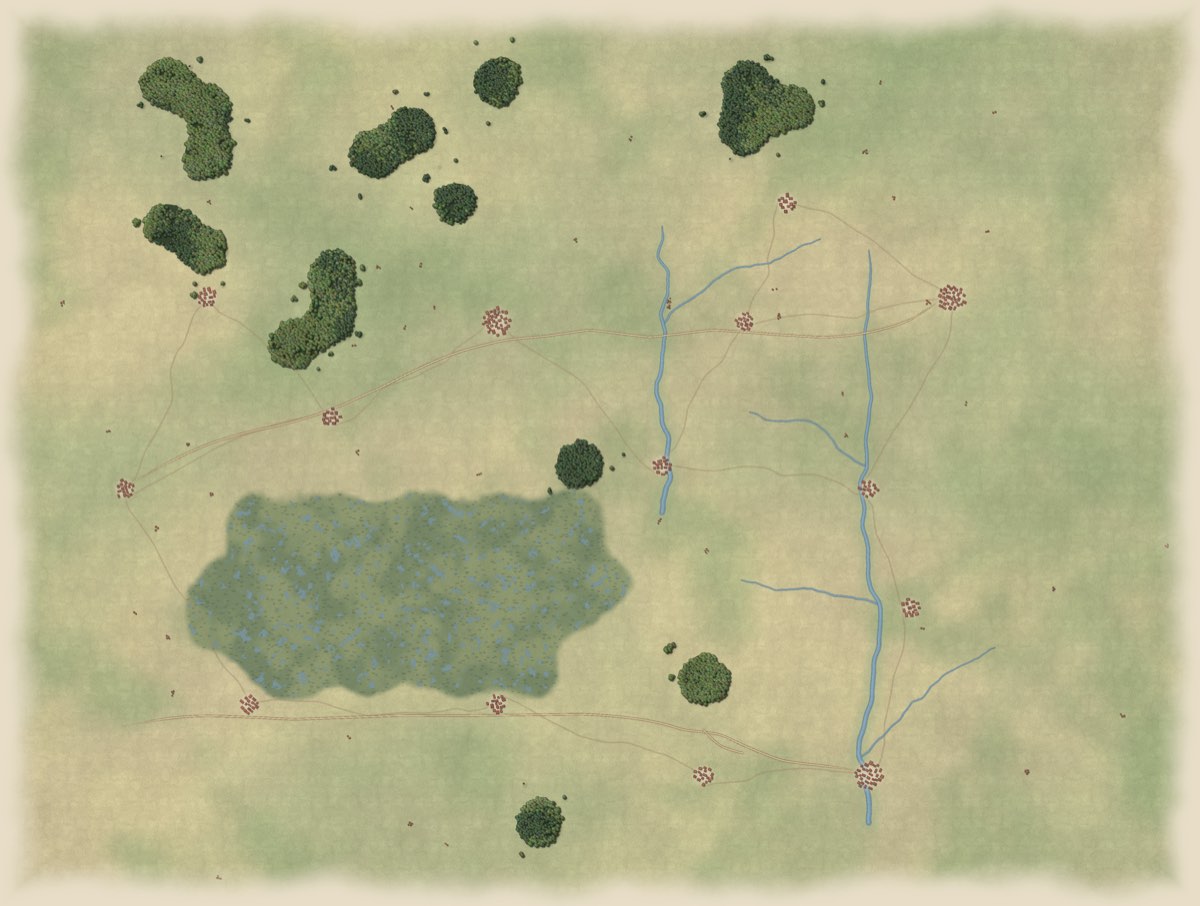
The painted Panzerkeil battle map of Operation Barbarossa: towns, rivers, roads and forests on a hex grid
The battle map in Panzerkeil.

The real battle

Operation Barbarossa

22 June to December 1941

The largest invasion in history began on 22 June 1941. Three German army groups took the Red Army by surprise. Minsk fell within a week and Smolensk by mid-July, and vast encirclements took prisoners by the hundred thousand. But the Soviet Union did not collapse, and by autumn the German timetable had slipped.

The cost. About 200,000 German dead by December. More than 800,000 Soviet soldiers dead and over 3 million captured, most of whom died in captivity. Behind the front, SS killing squads began the mass murder of Soviet Jews.

The result. The Axis won.

Key places

  • Minsk taken by the Axis on 28 June 1941
  • Smolensk taken by the Axis on 16 July 1941
  • Kiev taken by the Axis on 19 September 1941

In the game, when the battle ends, your result is set beside this one: who held each town and when, the account and the cost, read aloud by the general of your side.

In Panzerkeil

Fight it yourself

Both sides of this battle are in the game: fight it in each campaign, or in Quick Battle, or against another player in a match, one of you on each side.

The Axis Campaign · stage 5 of 17 · 1941

As the Wehrmacht: Unternehmen Barbarossa

Three million men cross the frontier at dawn. The Red Army is vast, forward-deployed and unready, but it is not Poland and it is not France: there is always another line behind the one just broken, and the distances swallow armies. Take Minsk and Smolensk on the Moscow highway and Kiev in the south. Keep the spearheads fed — a panzer division that outruns its supply is a row of stationary guns.
Date
22 June 1941
Turns
13 (decisive by turn 9)
You command
German forces, 20 units and 5 attached
Against
Soviet forces, 30 units
To win
Take all 3 objectives by the end of turn 13; take them by turn 9 for a decisive victory.
Objectives
Smolensk, Minsk and Kiev
Weather
Clear; rain from turn 12
In a match
Axis side Favoured, Allied side a Challenge

In the campaign. It follows The Battle of Britain or Operation Sea Lion or The Balkans Campaign. A decisive victory leads to The Battle of Moscow; any other result to The Battle of Kiev.

The Red Army · stage 1 of 12 · 1941

As the Red Army: Border Battles

At dawn the Germans attacked along the whole frontier, without warning and without a declaration of war. The armies of the frontier districts are being cut off and destroyed one by one. Fall back and hold what you can: Minsk, Smolensk and Kiev. Every day the panzers are held up is another day for the country to mobilise. Do not lose the army.
Date
22 June 1941
Turns
13
You command
Soviet forces, 18 units and 12 attached
Against
German forces, 25 units
To win
Hold at least 2 of the 3 objectives when turn 13 ends; hold all of them for a decisive victory.
Objectives
Smolensk, Minsk and Kiev
Weather
Clear; rain from turn 12
In a match
Axis side Favoured, Allied side a Challenge

In the campaign. It opens the campaign. Whatever the result, the campaign goes on to The Battle of Moscow.